
communities-shape-culture-of-daycare-in-noida

How Noida’s Growing Expat and Professional Communities Shape the Culture of Daycare in Noida

Modern Indian cities are no longer culturally uniform. Walk through any well-developed neighborhood today, and you’ll notice a blend of professionals, entrepreneurs, and families with global exposure shaping everyday lifestyles. With this diversity, Communities Shape Culture of Daycare in Noida, redefining how parents approach early childhood care.

In cities like Noida, this transformation is particularly noticeable. With a growing population of corporate professionals, startup founders, and expat families, expectations around childcare have evolved significantly. Daycare is no longer viewed as a basic support system for working parents. Instead, it has become a structured environment where children learn, interact, and grow.

This change is why many parents today approach the idea of daycare with a very different mindset. It is no longer just about convenience—it’s about finding a place that reflects modern parenting values, emotional awareness, and global standards of early learning.


A City Attracting Professionals and Global Exposure

Noida has steadily grown into a hub for professionals across industries. With major IT parks, multinational companies, and startup ecosystems spread across sectors like 18, 62, and beyond, the city attracts a highly dynamic workforce. Alongside this, there has been a visible rise in expat communities, particularly in corporate and long-term project roles.

This diverse mix naturally brings varied parenting approaches. Families relocating from different parts of India, as well as those with international exposure, carry different expectations about how children should be nurtured in their early years.

As a result, conversations around childcare have become more informed. Parents are more aware of early childhood development practices, and they actively look for environments that support not just care, but growth. This is one of the key reasons why the culture around a daycare in noida has evolved faster compared to many other cities.


Beyond Basic Care to Holistic Development

A few years ago, daycare choices were often based on proximity and basic safety. Today, that is only the starting point. Modern parents expect much more.

They look for structured routines that give children a sense of stability. They prefer learning-based play instead of passive activities. Emotional development, communication skills, and social interaction have become just as important as physical safety.

Interestingly, this shift is not driven by institutions alone—it is shaped by the parents themselves. When a large section of families shares similar expectations, it naturally raises the standard of services offered.

This is why choosing a daycare today often involves evaluating how well a center supports a child’s overall development, not just their supervision during working hours.


How International Exposure Shapes Early Learning Choices

One of the subtle yet powerful influences on daycare culture in Noida is the presence of globally exposed families. Whether it’s expats or Indian parents who have worked or lived abroad, their understanding of early education often includes approaches like Montessori or Reggio-inspired learning.

These approaches focus on independence, creativity, and allowing children to explore at their own pace. Instead of rigid instruction, the emphasis is on curiosity-driven learning.

What’s interesting is how these ideas spread. Even families without direct international exposure begin to adopt similar expectations simply by being part of the same community. Conversations in residential complexes, parent groups, and social circles create a shared understanding of what “good childcare” looks like.

Over time, this collective mindset reshapes how a daycare operates—making it more child-centric and experience-driven.


Tech-Savvy Parents Expect More Visibility

Another noticeable change comes from the professional background of many Noida parents. With a large percentage working in tech-enabled industries, there is a natural expectation of transparency and communication.

Parents today want to stay connected to their child’s day, even while they are at work. Regular updates, photos, activity summaries, and structured feedback have become important.

This is not about monitoring every moment, but about feeling reassured. When communication is clear, parents feel more confident and involved.

As a result, daycares are adapting to these expectations. Many now follow structured communication practices, which has become a defining feature of a modern daycare in noida.


Learning Beyond the Classroom

One of the most valuable aspects of a diverse community is the exposure it gives to children. In a city like Noida, children often grow up interacting with peers from different cultural, linguistic, and social backgrounds.

This diversity shows up in small but meaningful ways. Festivals from different cultures are celebrated. Children hear multiple languages being spoken. They learn to interact with peers who may have different routines or habits.

These experiences build confidence and adaptability from an early age. Children become more open, more curious, and more comfortable in varied environments.

For parents, this becomes an added advantage. A daycare in noida is not just a place for structured learning—it also becomes a space where children naturally develop social awareness and inclusivity.


Supporting Dual-Income and Busy Households

Noida’s work culture plays a significant role in shaping daycare needs. With a large number of dual-income households, consistency and reliability become critical.

Parents are often managing tight schedules, commuting between different parts of NCR, and balancing professional commitments with family responsibilities. In such situations, daycare is not just a support system—it becomes a part of the family’s daily structure.

This is why aspects like punctuality, routine consistency, and dependable care matter so much. Parents need to know that their child’s day is organized and predictable.

These expectations have pushed daycares to become more structured and reliable. Today, a well-functioning daycare in NCR reflects this alignment with modern work-life patterns.


How Neighborhood Culture Influences Daycare Choices

Another interesting factor is the role of residential communities. Noida’s sector-based planning creates clusters of like-minded families who often share similar lifestyles and expectations.

Parents frequently rely on recommendations from neighbors, friends, or local groups when choosing a daycare. Word-of-mouth becomes a powerful influence.

When a community values structured learning, safety, and communication, those expectations naturally extend to childcare providers in the area. Over time, this creates a localized ecosystem where certain standards become the norm.

This is one of the reasons why the experience of a daycare in noida can feel consistent within well-developed residential sectors.


Where Diverse Families and Infrastructure Meet: The Sector 19 Perspective

Some sectors in Noida offer a particularly balanced environment for families, and Sector 19 is a good example. It combines established residential communities with accessibility to schools, healthcare, and everyday essentials.

The area has a mix of long-term residents and working professionals, which creates a blend of traditional values and modern expectations. This balance often reflects in how families approach childcare.

From a practical perspective, central sectors like this also offer better connectivity. Parents can manage drop-offs, work commutes, and daily errands more efficiently.

While every family’s preference may differ, such neighborhoods naturally support a more stable and convenient childcare routine.


From Basic Facilities to Experience-Driven Care

When you step back and look at the bigger picture, it becomes clear that daycare standards are no longer shaped only by infrastructure. They are shaped by the people who use them.

Higher expectations from professional parents lead to better systems. Diverse communities encourage inclusivity. Global exposure introduces new learning approaches.

Together, these factors shift daycare from being a service to being an experience.

This evolution benefits all families. Even those who may not actively seek global practices still benefit from the improved quality and structure that comes with it.


What Parents Should Look for in a Modern Daycare Environment

With so many changes happening, choosing the right daycare can feel overwhelming. However, a few practical considerations can help simplify the decision.

Look at how the environment supports learning, not just supervision. Pay attention to communication practices—how often and how clearly updates are shared. Observe whether the environment feels inclusive and engaging for children.

Routine structure is equally important. A well-organized day helps children feel secure and comfortable. Most importantly, notice how your child responds to the space.

These factors often define the overall quality of a daycare, beyond just location or infrastructure.


Conclusion

Daycare culture in modern cities is shaped as much by communities as it is by institutions. In Noida, the growing presence of professionals and globally exposed families has quietly redefined what parents expect from early childcare.

From structured routines to inclusive environments and better communication, these shifts are visible across the city. They reflect a broader change in how families approach parenting in urban settings.

In many ways, choosing a daycare in noida today is about aligning with this evolving mindset—where care, learning, and environment come together.


A Thought to Close

Families often find that sectors with a strong mix of professionals and established communities offer a more balanced childcare experience. Areas like Sector 19, for instance, reflect how accessibility and community values can support everyday parenting routines in subtle but meaningful ways.


Looking for a well-connected and thoughtfully designed childcare environment in Noida? Click here to connect with tlsdaycare

Or Looking for a Playschool in Noida? Click here to visit The Little Scholar Playschool’s official website.

Easy Access to Daycare in Noida

The Smart Sector Layout Behind Easy Access to Daycare in Noida

1. Introduction

Modern parents don’t evaluate daycare quality in isolation anymore. Along with curriculum, safety, and caregivers, they also consider a very practical factor—easy access to daycare in Noida and how conveniently they can reach it every single day.

In large metropolitan regions like the NCR, commute efficiency plays a meaningful role in parenting decisions. A daycare might offer excellent facilities, but if the route to reach it involves chaotic traffic, unpredictable travel time, or complicated roads, daily routines can quickly become stressful.

This is where urban design quietly influences parenting experiences.

Cities that are planned with structured layouts, organized sectors, and predictable road networks often make childcare logistics far easier for families. Noida is one such example. Unlike many older cities that grew organically over time, Noida was designed with a grid-like sector system that brings residential areas, schools, healthcare, and daily conveniences closer together.

Because of this thoughtful planning, many families find that accessing childcare facilities in Noida is often more predictable and convenient than in many organically grown urban areas. The city’s structure supports smoother drop-offs, shorter travel distances, and better connectivity—factors that working parents increasingly value.

This blog explores how Noida’s sector-based city planning contributes to easier daycare access and why this urban advantage can quietly simplify everyday parenting routines.


2. Understanding Noida’s Sector-Based Urban Planning

A City Designed with Structure

To understand why daycare access feels smoother in Noida, it helps to understand how the city itself is designed.

Noida is one of India’s planned satellite cities. Its development was guided by structured urban planning authorities such as the New Okhla Industrial Development Authority (NOIDA) and the Greater Noida Industrial Development Authority (GNIDA). Instead of growing organically over decades like many older cities, Noida was designed with clearly defined sectors.

Each sector functions almost like a mini-neighborhood with its own residential zones, social infrastructure, and access roads.

Some of the defining characteristics include:

  • Clearly numbered sectors that make navigation easier

  • Parallel and wide arterial roads connecting different parts of the city

  • Planned intersections and service lanes

  • A balanced mix of residential, institutional, and commercial areas

This layout creates predictability. Parents generally know which roads connect which sectors, how long travel might take, and where essential facilities are located.

For families managing tight schedules, this type of structured planning becomes extremely valuable—especially when choosing a reliable daycare in Noida that fits seamlessly into daily routines.


3. Why Predictable Roads Matter for Parents with Young Children

When Morning Logistics Matter Most

Every working parent understands how delicate the morning routine can be.

There’s preparing breakfast, getting children ready, organizing school bags, and coordinating office schedules—all within a narrow time window. When daycare drop-offs are part of that routine, even small traffic uncertainties can disrupt the entire morning.

Research on commuting patterns and mental well-being consistently shows that long and unpredictable travel times increase stress levels, particularly for parents raising young children.

Predictable roads therefore matter more than we often realize.

Noida’s planning helps reduce some of that uncertainty. The city’s wider roads, structured intersections, and sector grid reduce navigation confusion and make routes easier to anticipate.

Parents often plan their drop-off routes around:

  • Main arterial roads connecting sectors

  • Internal sector roads with lighter traffic

  • Shorter cross-sector travel distances

Because of this infrastructure, accessibility becomes an important factor when families evaluate a dependable daycare in Noida. A location that is reachable through simple, predictable routes can make daily routines far less stressful.


4. The Convenience of Nearby Facilities Around Daycare Locations

How Sector Planning Creates Family-Friendly Zones

Another advantage of Noida’s sector planning is how essential services are clustered near residential areas.

Most sectors are designed to include or be close to facilities such as:

  • Parks and open spaces

  • Clinics and hospitals

  • Grocery stores and markets

  • Schools and childcare centers

This kind of ecosystem creates what many urban planners describe as “family-friendly zones.”

For parents, this means daily tasks can often be combined into a single trip. A morning routine might look like this:

Drop a child at daycare → stop by the nearby pharmacy → grab groceries → head to the office.

When essential services are located within the same or neighboring sectors, everyday logistics become simpler.

This convenience is one of the reasons why families often consider location carefully while choosing a well-situated daycare in Noida. Proximity to parks, healthcare facilities, and residential clusters helps ensure that childcare becomes part of a smooth daily loop rather than an isolated errand.


5. Shorter Travel Distances Reduce Stress for Both Parents and Children

The Hidden Benefit of Sector-Based Living

Short travel distances may seem like a small detail, but they can have a surprisingly large impact on family life.

Research on commuting and mental health shows that longer travel times are linked to higher levels of anxiety, time pressure, and work–family conflict. For parents with young children, this stress can quickly compound.

Sector-based living in Noida allows many families to choose childcare facilities within the same or nearby sectors. This naturally shortens travel distances and makes daily routines easier to manage.

The benefits are noticeable for both parents and children.

For parents:

  • Less time stuck in traffic

  • Greater control over daily schedules

  • Faster response in case of emergencies

For children:

  • Less travel fatigue

  • More time for play and learning

  • A calmer daily routine

These small improvements can significantly influence the overall parenting experience. It’s one reason why accessibility often becomes a practical factor when families assess a dependable daycare in NCR.


6. Sector 19: An Example of Central Accessibility in Noida

Why Central Sectors Often Attract Families

Certain sectors in Noida have gradually become known for their family-friendly infrastructure. Among them, Sector 19 stands out as a mature and centrally located neighborhood.

The sector benefits from a strong ecosystem of nearby facilities.

Within or around the area, families have access to:

  • Well-known schools such as Marigold Public School and Apeejay School

  • Healthcare institutions including Indo Gulf Hospital, Kailash Hospital, and Max Multi Speciality

  • Shopping and leisure destinations like DLF Mall of India, The Great India Place, and Wave Mall within a short driving distance

This mix of educational institutions, healthcare facilities, and residential communities makes the sector particularly convenient for families raising young children.

From a logistical perspective, central sectors like this often provide:

  • Multiple approach roads from neighboring sectors

  • Easier access for parents commuting across the city

  • Faster routes to hospitals during emergencies

Because of this connectivity, childcare centers located in such areas tend to benefit from smoother accessibility for parents across nearby neighborhoods.


7. The Role of Metro Connectivity and Expressways

Supporting Working Parents Across the NCR

Noida’s connectivity extends beyond road planning. Over the past decade, the city has developed a growing metro network that links it to multiple parts of the NCR.

The Noida Metro Aqua Line and the Delhi Metro extensions together form an expanding transit system connecting key residential and commercial areas. Upcoming infrastructure developments, including extensions toward Botanical Garden, are expected to strengthen this connectivity even further.

Alongside metro routes, expressways such as:

  • The Noida–Greater Noida Expressway

  • Major arterial roads across sectors

enable faster cross-city movement.

For working parents who commute to offices in South Delhi, Greater Noida, or nearby NCR hubs, this connectivity plays an important role. It ensures that managing childcare routines remains feasible even when workplaces are located in different parts of the region.

In such a connected urban environment, accessing a daycare in Noida can remain manageable for families who balance multiple commuting routes every day.


8. How Planned Cities Shape Better Childcare Ecosystems

Urban Design Meets Parenting Needs

Urban planning rarely enters parenting conversations directly. Yet the way a city is designed can strongly influence how families experience everyday life.

Planned cities like Noida are built with features that indirectly support childcare ecosystems, including:

  • Zoned land use separating residential and commercial activity

  • Wide arterial roads and service lanes

  • Space for parks, schools, and healthcare infrastructure

For families, this translates into practical advantages.

Residential pockets experience less chaotic traffic compared to older city centers. Walkability often improves, and social infrastructure is located within predictable distances.

These factors collectively create environments where childcare facilities can operate more efficiently and parents can access them without complicated travel.

It’s one of the reasons why structured urban planning often supports a stronger network of organized childcare services, including many well-established options for daycare.


9. What Parents Should Look for When Choosing a Daycare Location

Practical Considerations Beyond Facilities

When parents begin evaluating daycare options, the focus naturally falls on teachers, safety standards, and learning activities.

However, the location of the daycare is just as important.

A few practical factors can help parents make more informed decisions.

Distance and travel time
Choosing a daycare within the same or nearby sectors can significantly reduce daily commute stress.

Traffic predictability
Routes with wider roads and organized intersections often provide more consistent travel times.

Access to healthcare
Sectors with hospitals and clinics nearby offer additional peace of mind in case of emergencies.

Sector connectivity
Proximity to metro stations or major arterial roads can make daily drop-offs easier for working parents.

Neighborhood safety
Well-lit streets, gated communities, and family-oriented environments add an extra layer of comfort.

These considerations often complement curriculum and staff quality when parents evaluate a suitable daycare in NCR.


10. Conclusion

When parents think about daycare, they naturally focus on curriculum quality, safety standards, and caregiver experience. These factors are essential.

However, the city’s infrastructure also plays a quiet but important role in shaping childcare convenience.

Noida’s structured sector planning, organized road network, and thoughtfully distributed social infrastructure combine to create a city where daycare access can feel more predictable and manageable.

For working families, this translates into:

  • smoother morning routines

  • easier coordination between home, daycare, and work

  • quicker response options during unexpected situations

Urban planning rarely appears in parenting guides, yet it often shapes everyday experiences more than we realize.

In cities like Noida, that planning advantage quietly supports families by making everyday routines—including reaching a daycare in Noida—far easier to manage.


A Small Thought for Parents Exploring Options

Families exploring childcare often appreciate daycares located in well-connected sectors that simplify everyday routines.

Central areas such as Sector 19 naturally attract attention because of their accessibility, nearby healthcare facilities, and family-oriented neighborhoods.

If you’re currently evaluating childcare options in the city, choosing a well-located center can make daily parenting logistics far smoother.

Click here to enroll your child at TLS Daycare in Sector 19.

Looking for a Playschool for your child in Noida? Click here to visit our playschool website

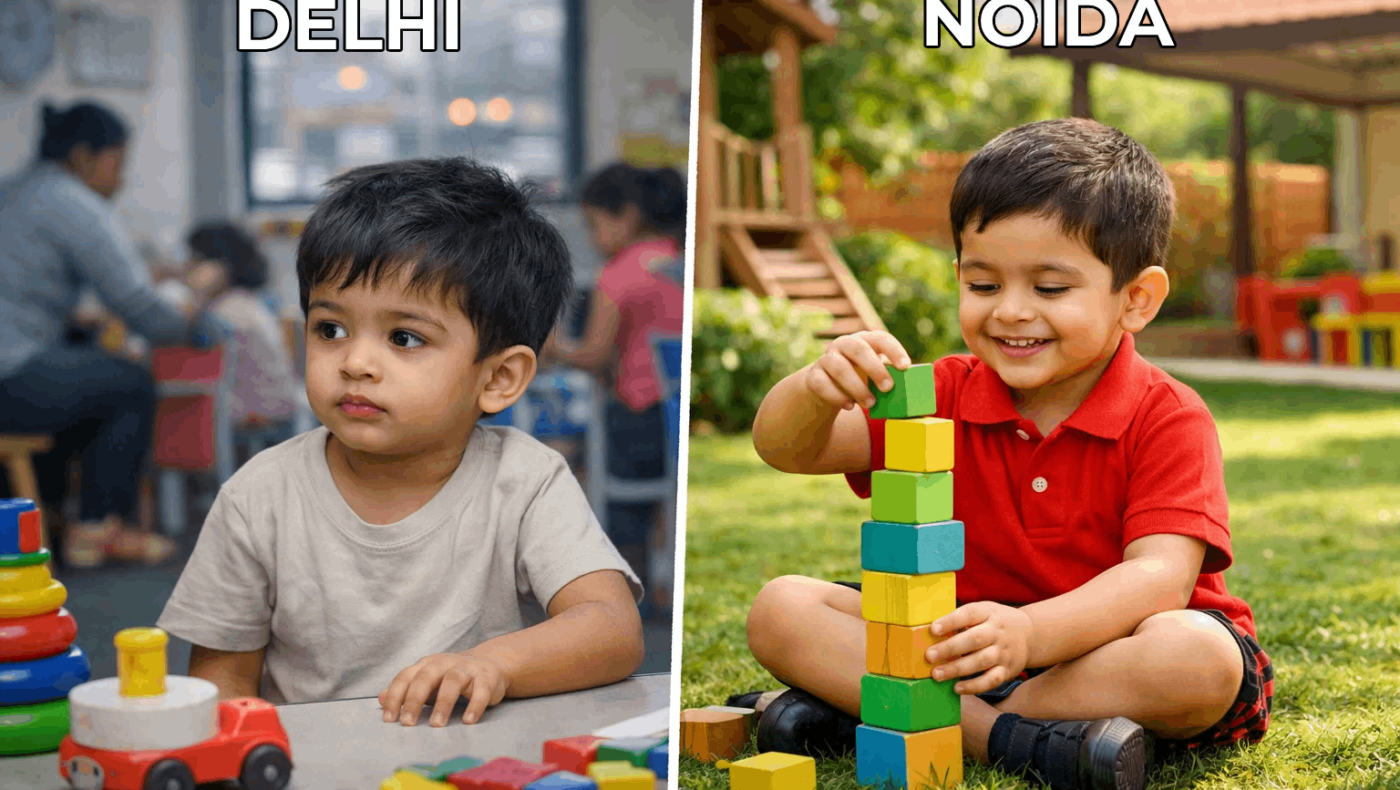
Delhi parents prefer daycare in Noida

Why Delhi Parents Prefer Daycare in Noida for Early Childhood Stability

Raising a young child in a large metropolitan region comes with trade-offs that parents rarely anticipate before they experience them. In Delhi NCR, one of the biggest shifts many families go through is the quiet realization that convenience does not always equal consistency. Over time, stability starts to matter more than proximity, which is why Delhi parents prefer daycare in Noida—they see it as a way to balance modern work demands with the need for reliable early childhood care.

Recent commute data shows that Delhi parents spend nearly 187 more hours a year in traffic than those living in planned NCR cities like Noida. That difference does not just affect work schedules. It affects morning routines, pick-up timings, caregiver consistency, and, eventually, a child’s emotional rhythm. It is not surprising, then, that many Delhi parents are now rethinking where their children spend their early years.

This is where the growing preference for daycare in Noida begins—not as a trend, but as a response to daily realities.

What “Stability” Really Means in Early Childhood

When parents talk about stability, they rarely mean comfort alone. In early childhood, stability refers to predictability. Children feel safer when their days follow a familiar pattern. They respond better when they see the same caregivers, play in the same environment, and transition through routines without disruption.

Child development studies show that consistent caregivers can reduce early anxiety by up to 30%. Predictable routines also improve confidence, attachment, and emotional regulation. These are not abstract benefits. They directly influence how children adapt to preschool and later schooling.

Urban life often challenges this consistency. Late workdays, unpredictable traffic, and changing schedules disrupt routines at home and outside. Over time, children absorb this instability even when parents try their best to buffer it.

This is why early emotional stability is now viewed as foundational, not optional.

Metro Parenting Pressures in Delhi

Delhi is a powerful city. It offers opportunity, diversity, and access. Yet, it also carries density, congestion, and unpredictability. High population pressure and traffic congestion mean that even short distances can take unpredictable amounts of time.

For working parents, this unpredictability creates daily stress points. Delayed pickups. Rushed mornings. Missed routines. These moments accumulate.

At the same time, family structures are changing. Nearly 50% of urban Indian families are now nuclear. With fewer grandparents or extended family members available for support, daycare becomes more than a service. It becomes part of a child’s emotional ecosystem. (source : thehindubusinessline.com)

Delhi’s childcare demand has grown rapidly due to migration and employment concentration. However, supply has struggled to maintain the same calm, spacious environments that children benefit from most.

Why Noida Fits the Stability Gap for NCR Parents

Noida was planned differently. Its sector-based design, wider roads, and lower congestion were intended to reduce friction in daily life. Over time, this design has become particularly valuable for families with young children.

The city has 42% more green cover than Delhi, which directly affects noise levels, air quality, and sensory overload. For a child, these environmental factors matter more than adults often realize.

Parents commuting from Delhi have increasingly noticed that while the distance may be slightly longer, the experience is more predictable. Commute timings remain consistent. Pick-ups happen on schedule. Days follow a rhythm.

This predictability is why many families quietly opt for daycare in Noida, even when their workplace remains in Delhi.

Daily Routine Consistency: A Key Deciding Factor

One of the strongest shifts in parental decision-making is the willingness to trade a slightly longer drive for calmer care. Surveys show that parents are comfortable with 10–20 extra minutes of travel if it ensures routine stability for their child.

Noida’s infrastructure supports this choice. Sector-based navigation, e-rickshaw connectivity, and GPS-enabled school transport systems allow parents to plan their days with confidence. In some NCR zones, over 90% of daycare transport now includes live tracking, which further reduces anxiety.

Children thrive on repetition. Fixed meal times. Predictable naps. Familiar drop-off rituals. When these elements stay intact, children settle faster and show higher engagement.

Sector-Based Planning and Child-Centric Infrastructure

Sector planning is not just an urban concept. It directly affects childhood experiences. Noida’s sectors were designed with residential balance in mind. Lower congestion, defined boundaries, and better emergency access contribute to safer daily movement.

Established sectors such as Sector 19 and Sector 50 are known for walkability and mature residential layouts. Emergency response times in these areas are reported to be 22% faster than dense Delhi zones, which reassures many parents.

Noida Sector 19, in particular, has evolved into a family-centric hub. With multiple preschools and daycares operating within close proximity, parents benefit from choice without chaos. The area supports long-term enrollments rather than short transitions, which is critical for emotional continuity.

Emotional Security Through Familiarity

Children build trust through repetition. Seeing the same faces every day matters. Stable staff, familiar classrooms, and consistent peer groups help children feel secure.

Daycares in established Noida sectors report longer enrollment durations, often spanning several years. This allows children to grow within the same environment instead of adjusting repeatedly.

Smaller group sizes and balanced caregiver-to-child ratios also support stronger emotional bonds. Research indicates that such environments reduce behavioral stress markers and improve social confidence.

Parents often notice these changes subtly. A child who transitions more easily. Improved communication. Reduced separation anxiety. These outcomes are tied directly to environmental stability.

This is another reason daycare in Noida resonates with parents who value emotional well-being over convenience alone.

What Delhi Parents Actually Look For Beyond Location

Conversations with NCR parents reveal a consistent pattern. Location matters, but it is rarely the top priority.

What parents prioritize instead includes:

  • Emotional safety and comfort
  • Continuity of caregivers
  • Calm, clean environments
  • Transparent communication

Over 80% of parents rank emotional safety above commute distance. Nearly 70% prioritize routine continuity over proximity to home or office.

Noida’s appeal lies in how naturally it supports these priorities. Less congestion. More space. Better planning. The city does not replace Delhi; it complements it by offering balance.

For many families, choosing daycare in Noida becomes a strategic decision rather than a logistical one.

A Subtle Local Perspective from Established Sectors

Professionals working in long-established Noida sectors often observe similar patterns. Parents from Delhi tend to enroll earlier and stay longer. Expectations are clearer. Communication is more structured.

Sector 19, in particular, reflects this maturity. Families often prefer environments where routines are respected and transitions are minimized. Trust builds gradually, and children remain enrolled for extended periods.

These patterns are not marketing outcomes. They are organic results of stability, community familiarity, and environment design.

Conclusion: Stability as the New Urban Parenting Priority

  • Parenting in a metro region requires constant negotiation.
  • Between work and home.
  • Balancing ambition and attention.
  • Between speed and stability.

Increasingly, parents are choosing stability. They are looking for environments that protect their child’s emotional rhythm during the most formative years. Noida’s planned infrastructure, calmer sectors, and predictable routines meet this need naturally.

For many Delhi families, opting for daycare in Noida is not about relocation. It is about ensuring that their child’s early years are grounded, secure, and consistent.

A Gentle Next Step for Parents

Before choosing any daycare, observe more than facilities. Watch routines. Notice caregiver continuity. Pay attention to how children transition through the day.

If you are exploring stable early-childhood care in NCR and would like to understand how a mature sector-based environment supports long-term development, you may explore enrollment options at a Sector-19 Noida daycare here:
👉 Click here to enrol your child – www.tlsdaycare.com

how-noidas-modern-healthcare-ecosystem-supports-better-safety-standards-in-daycare-in-noida

How Noida’s Modern Healthcare Ecosystem Supports Better Safety Standards in Daycare in Noida

For most parents, the decision to choose a daycare is not just about learning spaces, teachers, or curriculum. It’s equally about trust, safety, and knowing that if anything unexpected happens, help is just minutes away. In India, children under five account for nearly 10% of emergency hospital visits—often due to fevers, seasonal infections, allergies, or minor injuries. No wonder 78% of urban parents now consider healthcare proximity a top priority when evaluating Safety Standards in Daycare in Noida, where the balance between nurturing care and medical readiness becomes essential.

This focus on safety becomes even more relevant when you look at how only 30% of urban daycares in India undergo regular safety inspections. In such a landscape, cities with strong healthcare support naturally offer better reassurance to parents. Noida stands out as one of those rare places where the surrounding infrastructure directly contributes to safer childcare environments, giving families confidence that their children are protected in more than just the classroom.

Understanding Why Healthcare Access Matters for Daycare Safety

Daycares routinely handle issues like sudden fevers, dehydration, falls, or allergic reactions. Studies show that quick access to medical help can reduce the risk of complications by 20–30%. But more than half of Indian daycares don’t have on-site medical staff, which means they rely heavily on nearby clinics and hospitals.

For parents, this matters more than ever. Surveys across NCR show that 69% of families base their daycare decisions on how close the nearest emergency hospital is. A difference of minutes can change everything, and this is where choosing a daycare in Noida becomes an advantage.

Noida’s Healthcare Strength: A Metro-Grade Network Parents Depend On

Noida’s medical infrastructure has grown rapidly over the last decade. The city has more multispecialty hospitals per square kilometre than many neighbouring NCR regions. With more than 50 well-equipped hospitals—including Max, Fortis, Apollo, Jaypee, IndoGulf, Cloudnine, and others—parents in centrally located sectors have access to 24×7 pediatric care.

Sector 19 alone is surrounded by 35+ emergency services within a 5–10 km range. This isn’t common even in other major Indian metros. Compare this to many Tier-2 towns, where ambulance response can take 1–4 hours. In Noida, the same support often arrives within 10–20 minutes.

This proximity directly strengthens safety standards for every daycare in Noida, because it ensures that help is never far when a child needs immediate attention.

How Daycares Benefit from Multispecialty Hospitals Nearby

When daycares operate close to major hospitals, response time during emergencies shrinks dramatically. In Noida, especially in sectors like 18, 19, 27, and 62, travel time to pediatric ERs ranges between 5 and 15 minutes. This gap can improve outcomes for children in time-sensitive situations such as breathing difficulties, dehydration during heatwaves, allergic reactions, or sudden high fever.

Several daycares across Noida also follow structured protocols guided by pediatric units nearby. Some collaborate with hospitals for first-aid training, emergency drills, and access to dedicated pediatric ambulances. These tie-ups give parents greater confidence without making the environment feel overly clinical.

With this supportive network, a daycare in NCR especially in Noida naturally operates with a stronger safety cushion than those in less-equipped regions.

The Quiet Role of Pediatric Clinics and Specialists Around Sector 19

Beyond big hospitals, Noida is filled with specialized pediatric clinics that support daycares and local families. More than 100 clinics operate across the city, providing vaccinations, routine health screenings, and child-focused diagnostic services.

Sector 19, for example, has HOD Diagnostics, multiple pediatric consultation clinics, and quick-turnaround testing facilities. Parents often get home sample collection done within 45 minutes—a convenience that fits perfectly into the lifestyle of double-income households.

Premium daycares often consult nearby pediatricians to build health plans or seasonal care guidelines. This isn’t mandatory under India’s ECCE recommendations but is becoming more common in cities with better healthcare access. As a result, families choosing a daycare in Noida benefit from a preventive health environment, not just reactive care.

How Noida’s Planned Layout Directly Reduces Risk

Noida’s city planning gives it a unique safety advantage. Unlike congested metros where narrow lanes slow down emergency movement, Noida’s grid-based sectors and wider roads support smoother, faster medical access.

While the national average ambulance time for emergencies is around 134 minutes, Noida sectors often achieve hospital access in 10–20 minutes. The reduction in travel time significantly lowers the risk of conditions escalating in children.

Parents might not think about this daily, but in critical moments, this predictability makes a huge difference for any daycare in NCR especially in Noida.

What This Ecosystem Means for Parents

For Noida’s growing working population—especially parents commuting to Delhi or Gurugram—the healthcare ecosystem provides a sense of control and peace of mind. Eight out of ten parents in Noida say that easy access to hospitals is one of their top reasons for choosing childcare in this region.

With nuclear families becoming the norm and nearly 70% of households relying on both parents working, quick medical access becomes more than convenience—it becomes a necessity. Noida supports that routine seamlessly.

Real-Life Situations Where Proximity Makes All the Difference

Parents often share how Noida’s healthcare network has helped them during unforeseen situations:

  • A sudden spike in viral fever managed within minutes at a Sector 19 ER

  • Minor playground injuries treated quickly at IndoGulf or Cloudnine

  • Allergic reactions handled promptly because pediatric ambulances are available

  • Summer dehydration stabilized with IV fluids in less than 15 minutes

These everyday examples reflect how the ecosystem surrounding a daycare in Noida acts as an added safety layer for children.

Why Sector 19 Stands Out

Sector 19 is one of Noida’s most balanced localities for families with young children. It has residential neighborhoods, parks, schools, diagnostic centres, and emergency facilities all within a compact radius. Parents here often report twice the speed in medical access compared to outer sectors or nearby cities.

This cluster of healthcare services naturally supports daycares in the area, helping them maintain higher standards of child safety and preparedness.

Conclusion

At a time when only a fraction of Indian daycares undergo regular inspections, choosing a location with a strong external safety net becomes incredibly important. Noida’s concentrated healthcare infrastructure—supported by multispecialty hospitals, pediatric clinics, and efficient emergency access—creates a trustworthy environment for childcare.

From faster ambulance response to 24×7 pediatric care, the city offers advantages that many parents don’t fully realize until they experience them firsthand. This is what makes selecting a daycare  not just a practical choice, but a safer one.

Seeking a trusted daycare in Noida? Click here to contact TLS Daycare. A reputed daycare since 35+ years in Delhi NCR.

Looking for a reliable playschool in Noida for you little one? Visit our official play school website at www.littlescholarnoida.in

delhis-proximity-to-daycare-in-noida

Exploring How Delhi’s Proximity to Daycare in Noida Fuels Early Childhood Growth

Introduction

For parents in the NCR region, location plays a quiet yet powerful role in early childhood development. Delhi’s Proximity to Daycare in Noida offers families a unique advantage—one where rapid urban growth meets cultural richness just minutes away. Weekend visits to Delhi’s museums, art fests, and science fairs become more than outings; they become formative experiences that shape young minds in subtle, lasting ways.

This close intercity connection forms what many educators call a “learning ecosystem.” It allows children to engage with world-class cultural and educational spaces without the burden of long commutes or complex logistics. This blog explores how that ecosystem fuels curiosity, creativity, and cognitive growth in the city’s youngest learners.


The Advantage of Proximity: Noida & Delhi’s Learning Ecosystem

One of Noida’s biggest strengths is its geography. The city lies just 20–35 minutes from central Delhi, where a world of museums, children’s theatres, and art galleries awaits. For children, these spaces serve as living classrooms.

Research shows that kids exposed to out-of-classroom learning—like museum visits or science exhibits—develop up to 15% higher vocabulary and better peer collaboration (source : onlinelibrary.wilie). Parents in Noida benefit from this proximity every week. Many manage demanding Delhi commutes while still engaging their children in after-school cultural visits. That balance is hard to find in most other Indian cities.

This synergy of convenience and exposure gives daycare in Noida a special edge. Learning is not confined to the classroom—it extends into the rich cultural world just across the border.


Daycare Learning in an Urban Context

Modern daycares in Noida have adapted their teaching styles to suit a fast-evolving urban lifestyle. Many now integrate city-inspired activities into their curriculum. For example, daycares in Sector 19 design theme weeks around sustainability, art, or technology—reflecting the metro city’s real-world rhythm.

Some centers even collaborate with Delhi-based educators for storytelling sessions, science experiments, or art workshops. These interactions give children a sense of belonging to a bigger, more vibrant community.

Daycares like TLS in Sector 19 combine structured classroom routines with inspiration drawn from Delhi’s cultural events. This ensures both safety and rich exploration—an ideal mix for growing minds.


Delhi’s Cultural and Educational Spaces That Inspire Early Growth

Delhi is a goldmine for young learners. Spaces like the National Science Centre at Pragati Maidan or the Children’s Museum at Siri Fort are designed to spark wonder. The India Habitat Centre and IGNCA often host art expos and book festivals that welcome families with toddlers.

Regular exposure to such places can improve children’s attention spans, creativity, and reading readiness by up to 20%, as studies suggest. These experiences also nurture patience and social confidence—skills that matter long after daycare years.

Educators in daycare in NCR especially in Noida often recreate these experiences indoors. For instance, a “Mini Science Week” might take cues from exhibits seen at the Science Centre. Or a “Book Festival Day” could echo themes from Delhi’s annual children’s fair. Such cross-city inspiration enriches learning for every child, whether they visit Delhi or not.


How Noida’s Daycares Integrate Delhi’s Enrichment Opportunities

Many daycares in Noida have turned Delhi’s proximity into an active learning advantage. They organize field trips, parent-child art sessions, or science projects based on upcoming Delhi events.

For example, before a Delhi art exhibition, children might paint with natural materials or create recycled craft pieces. During science fairs, educators host mini-experiments that echo the themes of innovation and curiosity.

TLS Daycare in Sector 19 is a leading example. It regularly adapts its weekly plans to Delhi’s cultural calendar. Children learn not only from books but also from real experiences tied to their surroundings. This local-global balance makes early learning both meaningful and fun.


Benefits for Parents: Access, Awareness, and Involvement

For parents, proximity means participation. In recent NCR parent surveys, more than 60% said real-world learning opportunities influenced their daycare choice. Many parents now join field trips or cultural outings, using Noida’s fast routes to Delhi to stay involved.

Such engagement creates strong family bonds. Children feel proud when parents share their learning journeys. For working parents especially, daycare in Noida offers both convenience and enrichment—without the guilt of missed moments.

It’s this blend of access and awareness that makes Noida a preferred daycare hub for families who value holistic development.


Balancing City Life and Childhood Innocence

Noida’s charm lies in balance. Despite being a modern, well-planned city, it still feels personal and community-driven. Daycares, especially those in established sectors like 19, preserve this warmth while offering structured learning.

Educators here ensure children experience the joy of simple play, even as they gain city-level exposure. This delicate balance between innocence and ambition defines the best daycare in Noida today.

Parents often remark that their children come home not just with new words or songs but with curiosity about the world—about colors, sounds, and stories beyond their classrooms.


The Larger Picture: Building Tomorrow’s Global Citizens

The early years are about more than ABCs or counting. They are about understanding the world. Children in Noida, with access to Delhi’s diversity, grow up with wider worldviews and stronger empathy.

Research highlights that early cultural exposure builds “future-ready” skills like collaboration and creative thinking. These are the same traits global educators consider essential for tomorrow’s learners.

For families living in this vibrant corridor between Noida and Delhi, every day becomes an opportunity to raise thoughtful, curious, and confident children.


Conclusion

Delhi’s cultural wealth and Noida’s modern learning spaces make a powerful team. Together, they form an ecosystem that gives children a head start in both knowledge and emotional intelligence.

For today’s parents, the most valuable daycare in Noida is one that bridges the comfort of local care with the world of big-city learning next door. It’s not just about proximity—it’s about perspective.

So, as you consider your child’s first steps into structured learning, think about how your city itself can be a classroom.

Click here to enroll your child at TLS Daycare, Sector 19, Noida — where every week, “big city” learning meets neighborhood care.

The Culture of Daycare in Noida: What Today’s Parents Expect and Why It Matters

Walk into any modern daycare in Noida, and you’ll notice something beyond the usual sight of colorful walls and playful laughter. There’s an entire culture at work — one shaped by the changing expectations of today’s urban parents. For families navigating busy careers, evolving lifestyles, and the desire for holistic childhood development, daycare is no longer just a service; it’s a carefully chosen partnership.

As Noida continues to grow as a hub of working professionals, its childcare culture has evolved in equally dynamic ways. Parents now look for centers that reflect their personal values, work rhythms, and parenting philosophies. They expect a balance between emotional warmth, structured learning, and modern convenience — a combination that defines what makes a daycare environment truly meaningful in a metropolitan city.


1. From Supervision to Nurturing: How Daycare Culture Has Evolved

A decade ago, many families saw daycare as simply a safe place to leave their child while they worked. But in Noida — and across urban India — the concept has matured. Today, parents expect daycares to play an active role in shaping their child’s early social, emotional, and creative growth.

The most respected centers now blend play-based learning with gentle structure. Activities are designed not just to keep children occupied but to help them communicate better, think independently, and build empathy. This transformation mirrors the lifestyle of dual-income families, who want environments that encourage independence while still feeling as personal as home.

In neighborhoods like Sector 19, the cultural shift is especially evident. Families often choose institutions that prioritize individual attention, community involvement, and a blend of education with emotional care — qualities that are redefining what parents seek from a daycare in Noida.


2. What Parents Expect from Daycare in Noida

Urban parents have become more aware, observant, and selective. They now expect a level of professionalism and engagement that goes well beyond traditional childcare. Surveys show that more than 70% of Delhi-NCR parents look for regular updates about their child’s day — from meal details to activity photos and progress notes.

Communication has become a key trust factor. Parents prefer daycares that share digital updates through apps or portals, giving them a sense of participation in their child’s routine. Emotional connectivity is another must-have — parents want caregivers who can form real bonds with their children and offer a comforting sense of stability.

Cleanliness, safety, and curriculum quality continue to be priorities, but now, they’re seen as minimum standards. Parents in Noida often compare programs based on the value they deliver — focusing on how creatively the daycare integrates play, learning, and emotional care into everyday life.


3. Technology as a Bridge of Trust

Noida’s tech-savvy population has also changed the way parents evaluate childcare. Technology is no longer just a convenience; it’s a reassurance mechanism. Leading daycares now use CCTV access, attendance logs, and parent communication apps to build trust and transparency.

Parents, especially those working in IT and corporate hubs around Sectors 18, 19, and 62, expect such digital tools as a given. They help bridge the emotional distance during long workdays, offering small but powerful reassurances that their child is happy and safe.

However, technology in daycares today goes beyond monitoring. Some centers also integrate interactive learning modules — digital storytelling, smart screens for guided play, and progress tracking systems. When used thoughtfully, these tools strengthen the connection between caregivers, children, and parents, creating an ecosystem of openness and confidence.


4. Beyond Routine: The Rise of Enrichment and Extracurriculars

For many parents, choosing a daycare in Noida now feels similar to selecting a preschool. The expectation is that children should not just be cared for — they should be exposed to experiences that nurture creativity and curiosity.

Daycares in Noida are increasingly offering activities like dance, art, storytelling, music, yoga, and early STEM concepts as part of their weekly plans. Parents see these not as optional luxuries but as essential parts of early development. The focus has shifted from “keeping children busy” to “helping them grow.”

This evolution reflects a broader understanding among urban parents that early exposure to diverse experiences builds emotional intelligence, motor skills, and confidence. It also mirrors their own professional worlds, where creativity and adaptability are as valued as academic achievement.


5. Cultural Sensitivity: Reflecting Noida’s Diversity

Noida’s growing population represents families from across India — and increasingly, from around the world. This diversity has naturally influenced how daycares operate. The best centers now celebrate festivals from multiple regions, encourage bilingual communication, and teach inclusivity through stories and group activities.

These cultural experiences do more than decorate calendars; they help children learn empathy and appreciation for differences from a young age. Studies show that multicultural exposure at early stages enhances adaptability and vocabulary while shaping a more open-minded worldview.

Daycares across Noida now see cultural sensitivity as part of education itself. Teachers and caregivers are trained to respect linguistic and lifestyle differences, ensuring that every child — and every family — feels represented and comfortable. This evolving inclusiveness forms one of the strongest pillars of the modern daycare in Noida ecosystem.


6. The Community Connection: Sector 19 and the Local Pulse

While Noida’s growth has brought a modern edge to parenting, its sense of neighborhood remains strong. Communities like Sector 19 have preserved the idea of local belonging — where parents, caregivers, and teachers often know each other personally.

Many daycares in such areas serve as community anchors. They host parent-child events, share feedback openly, and involve families in celebrations and child progress reviews. This interconnectedness builds long-term trust and helps children see learning as a social experience rather than a solitary one.

Parents appreciate when daycare staff are not just professionals but part of their extended community. It reinforces the comfort that their child is growing up surrounded by familiar faces and shared values — something that’s especially meaningful for working parents managing tight schedules.


7. Why These Cultural Shifts Matter

The evolution of daycare culture in Noida tells a larger story about parenting in modern India. It reflects how families today want to raise emotionally intelligent, adaptable, and socially aware children. The focus is no longer just on milestones but on experiences that shape personality and resilience.

This shift also highlights how cities like Noida are setting new benchmarks for childcare standards. The mix of technology, empathy, cultural inclusion, and flexible structures is becoming the model other metros aim to follow. With each new center and curriculum innovation, daycare’s in NCR especially Noida are defining what progressive early learning looks like in an urban context.

It’s also a reminder that good daycare isn’t just about children — it’s about the ecosystem of trust between parents, teachers, and communities. When these elements align, the daycare experience becomes a cornerstone of confident parenting in metropolitan life.


8. The Future of Daycare Culture in India’s Metros

Looking ahead, daycares in Noida are likely to become even more personalized. Parents will continue to expect flexible hours, real-time updates, and tailored learning paths. Technology will remain a facilitator, but emotional connection and cultural awareness will be the true differentiators.

The Indian childcare market — already valued at $4.6 billion in 2024 — is expected to grow rapidly, with Noida among the key growth centers. This surge isn’t just about numbers; it’s about evolving philosophies. As more parents prioritize social-emotional development and inclusivity, daycares will need to stay aligned with these modern expectations.

In that sense, Noida is not just a location but a lens — a way to understand how cities are reimagining early education to keep pace with their own fast-changing identities.


Conclusion

The culture of daycare in Noida mirrors the evolution of urban parenting itself — thoughtful, connected, and forward-looking. Parents no longer settle for safe spaces alone; they look for environments that nurture confidence, empathy, and creativity in equal measure.

For families in metropolitan settings, daycare has become an extension of home — one that supports both personal and professional aspirations with care, transparency, and understanding. As this cultural shift continues, Noida’s daycares will remain at the heart of what it means to raise children in a world that’s modern yet deeply human.


🌿 Call to Action

If you’re exploring early learning options that blend care, creativity, and community — click here to enroll your child at TLS Daycare (Sector 19, Noida) and experience how thoughtful childcare can truly feel like an extension of home.

costs-of-daycare-in-noida

Understanding the Costs of Daycare in Noida: What Are You Really Paying For?

Introduction

For most urban families, the decision to send a child to daycare isn’t just about convenience anymore—it’s about choosing an environment that supports growth, safety, and balance for the entire family. In cities like Noida, parents often ask: Why are daycare costs so high? On the surface, fees seem like a simple number on a brochure. But what you’re really paying for goes far deeper than that monthly cheque.

Across metropolitan India, and especially in places like Noida, parents now see daycare not as an optional support but as an essential investment. The fees cover far more than meals and supervision; they reflect a city’s growing demand for high-quality early childhood care. Understanding these costs helps parents make informed choices about where their child spends their formative years.


Why Daycare Costs Differ in Metro Cities

The first thing parents notice is how different daycare fees look in a metro city compared to smaller towns. In Noida, fees typically range between ₹5,000 and ₹35,000 per month, while Tier-2 and Tier-3 cities often charge ₹3,000 to ₹15,000.

Why the gap? The difference comes from the urban premium. Daycares in Noida, Delhi, or Gurgaon invest more in trained staff, technology, security systems, and modern infrastructure. Parents in these areas also expect more—daily updates through apps, CCTV access, nutritious meals, and structured learning activities. In contrast, many small-town centers are still closer to basic childminding rather than comprehensive early education.

This premium reflects how metropolitan parents think differently. They don’t see daycare as a temporary arrangement; they view it as a vital extension of their child’s early learning. For this reason, the cost of a daycare in Noida often includes elements parents may not immediately notice.


Breaking Down the Core Costs of Daycare in Noida

To understand what your money supports, it helps to look at how daycares typically allocate resources:

  1. Staff Salaries
    Qualified caregivers, many with Early Childhood Care and Education (ECCE) certifications, form the backbone of daycare quality. Teacher-to-child ratios are critical here. Premium daycares in Noida often maintain a 1:6 ratio for toddlers, ensuring every child gets enough attention. Naturally, trained staff come at a higher cost.

  2. Infrastructure
    Safe, child-friendly buildings with indoor and outdoor play areas, fire safety measures, CCTV, and modern classrooms demand significant investment. For parents, this means peace of mind that children are learning and playing in a secure environment.

  3. Meals & Nutrition
    Many mid- and high-end centers provide meals planned by nutritionists or curated menus with allergen protocols. Balanced diets are a non-negotiable expectation for urban families, and they add to the monthly fee.

  4. Safety & Hygiene
    From background verification of staff to daily sanitization routines and medical kits on-site, much of what parents pay for goes into ensuring consistent safety standards. Particularly after recent health crises, hygiene has become a top priority.


Premium vs. Mid-Range Options

Not every parent looks for the same kind of daycare, and the range of options in Noida reflects this.

  • Premium Centers (₹12,000–₹25,000/month): These typically include specialized curricula (like Montessori or STEM exposure), multilingual programs, indoor-outdoor play, and digital parent access through apps. They may also have in-house chefs and advanced safety setups.

  • Mid-Range Centers (₹6,000–₹12,000/month): These focus on the fundamentals: caring staff, safe facilities, and structured play. They may skip the extras but still offer a nurturing environment.

Location also plays a role. Sectors like 19, 50, and other central areas in Noida often attract slightly higher fees because of accessibility and demand. Families working in nearby IT hubs or commercial zones often prefer these locations for daily convenience. Among these, TLS Daycare in Noida Sector 19 is often highlighted by parents for balancing central access with quality care.


The Hidden Benefits Parents Often Overlook

When parents look at a fee chart, they might think primarily of supervision, meals, and learning tools. But the real value of a daycare goes deeper into developmental areas that are harder to measure.

  • Social and Emotional Growth: Children learn confidence, empathy, and adaptability by being part of peer groups. This prepares them for school and life beyond.

  • Cultural and Peer Diversity: In a metro like Noida, children are exposed to peers from varied backgrounds, which enhances communication and adaptability from a very young age.

  • Confidence and Independence: Structured group play and routines build resilience and problem-solving skills.

For example, at some centers in Sector 19, parents note that children not only pick up early literacy but also develop habits like sharing, waiting their turn, and expressing themselves more clearly. These soft skills become just as valuable as academics later on.


Smart Questions Parents Should Ask Before Paying

Every parent has a budget, but beyond the monthly figure, the right questions help reveal the true value of a daycare:

  • Is food included, and is it balanced and hygienic?

  • What is the teacher-to-child ratio?

  • Are staff trained, certified, and background-verified?

  • What safety and emergency protocols are in place?

  • Is the location practical for daily drop-offs and pickups?

These questions not only clarify costs but also ensure parents pay for meaningful quality. When considering a daycare in Noida, it’s wise to compare not just fee charts but also the transparency with which centers share what those fees cover.


A Parent’s Perspective: Value-for-Money in Noida

From a parent’s point of view, the monthly daycare bill is less about numbers and more about peace of mind. For IT professionals or working parents in Noida, structured daycare often means fewer disruptions at work, better child development, and reliable daily routines.

Many parents compare this to informal options like hiring a maid or depending on relatives. While cheaper, these often lack structured activities, peer learning, and professional oversight. Paying for daycare ensures children gain exposure to a balanced mix of safety, learning, and socialization.

Parents in areas like Sector 19 often highlight why they pay slightly more: central location, trusted teacher credentials, and prompt communication through apps. These elements, though invisible on a fee chart, matter enormously in daily life.


Conclusion

So, what are you really paying for when you invest in a daycare in Noida? It’s not just meals and supervision. The costs reflect trained caregivers, safe infrastructure, hygienic routines, structured learning, and emotional growth. They also include intangible benefits like confidence, adaptability, and readiness for the next stage of schooling.

Urban parents know that daycare is not an expense—it’s an early investment in their child’s future. In Noida, daycares that align with these expectations justify their fees by delivering outcomes that go beyond the basics.

Think of it this way: what you spend today builds habits, skills, and resilience that last a lifetime.


When you consider daycare costs, ask yourself: What matters most—safety, curriculum, or location?

If you’re exploring options, you can visit trusted centers like TLS Daycare in Sector 19, Noida for a transparent view of what your investment supports.

👉 Click here to enroll your child at TLS Daycare

Looking for a Playschool for your child in Noida. Visit our playschool website at www.thelittlescholar.co.in

environment-supports-daycare-in-noida

Exploring How Environment Supports Daycare in Noida Through Green Zones and Gated Living

Introduction

Imagine walking your child through a quiet lane shaded by trees, with secure gates around the corner and a daycare nestled inside a green neighborhood. For many parents, this isn’t just a pleasant thought—it’s a daily reality shaped by how the environment supports daycare in Noida. Through thoughtful urban planning, the city blends safety, greenery, and accessibility into a child-friendly ecosystem that nurtures both comfort and confidence.

Why does this matter for families exploring childcare options? Research shows that the surroundings a child grows up in act like a silent caregiver. Safe pathways, eco-conscious zones, and access to outdoor play have a direct impact on physical health, emotional development, and social growth. In cities where infrastructure prioritizes walkability and green living, these benefits are not just incidental—they’re built into the everyday experience.


The Environment as the Silent Caregiver

Children don’t just learn from teachers or peers. Their surroundings quietly shape the way they grow. Studies from global urban research show that children who live near parks and secure walkways experience fewer behavioral issues, better physical health, and stronger creativity.

In fact, green zones are linked to reduced stress in children by up to 11%. Long-term exposure to safe outdoor play has also been found to speed up emotional maturity and lower aggression. Parents evaluating daycare in Noida often prioritize neighborhoods with these qualities, understanding that environment influences development as much as curriculum does.


The Green Advantage in Metropolitan Daycare

Noida stands out among metro cities because of its commitment to greenery. With over 729 parks and 195 green belts, the city enjoys 42% more green cover than comparable Delhi neighborhoods. Sectors like 15, 19, 41, and 50 are known for their tree-lined streets and well-maintained parks.

For children, this translates into a daily opportunity for outdoor play. Daycares situated within walking distance of safe green zones can weave nature-based activities into everyday schedules. Outdoor games build social skills, reduce stress, and encourage teamwork—all of which are vital in early years. Parents see this as a practical benefit, not a luxury. When weighing options for daycare in Noida, access to green surroundings often becomes a deciding factor.


Gated Communities and Child Safety

In bustling cities, safety is one of the biggest concerns for families. Here, Noida’s gated communities provide a reassuring solution. With controlled entry and exit points, CCTV monitoring, and dedicated security staff, these societies create micro-ecosystems where children can play freely.

This sense of security is more than just about protection from external risks. It also allows children to socialize without the constant fear of traffic or strangers. Peer interactions in gated parks or society playgrounds foster resilience, independence, and confidence.

Some of the most trusted daycares in Noida—including centers in areas like Sector 19—benefit from these environments. Their location inside or near secure gated societies gives parents confidence that daily routines remain safe, structured, and consistent.


Walkability and Reduced Commute Stress

Another often-overlooked factor in daycare choice is walkability. Noida’s sector-based planning ensures that families rarely need to travel more than 2–3 km for essential services, including daycare. Unlike gridlocked metros such as Delhi or Mumbai, where traffic can eat up hours, Noida offers smoother traffic flow and pedestrian-friendly lanes.

For parents, this means easier drop-offs and pick-ups. For children, it reduces commute fatigue and provides more time for learning and play. In many surveys, parents rank “ease of daily routine” as one of the top priorities while selecting a daycare. This is where the structured layout of Noida plays a decisive role. A nearby daycare in Noida doesn’t just save time—it ensures children arrive calm and ready to engage.


Noida vs. Other Metro Cities: The Environmental Edge

Comparisons with other metro cities make Noida’s strengths even clearer. Gurgaon and Delhi both offer quality educational institutions, but they struggle with dense traffic, lower green cover, and fragmented urban layouts. Mumbai, despite its strong childcare culture, suffers from space constraints and lack of safe pedestrian zones.

By contrast, Noida provides a rare balance of green belts, gated societies, and systematic grid layouts. Families living in child-centric sectors like 19, 50, and 150 enjoy not just greenery but also walkable and quieter streets. This combination is unusual in India’s urban build-out, making Noida an emerging model for family-friendly development.


A Sector 19 Example: Environment Meets Care

Sector 19 in Noida highlights how the city’s planning directly benefits early childcare. Surrounded by green parks, walkable lanes, and safe gated communities, it offers a supportive backdrop for local daycares. Parents in this sector often note how children get the advantage of both indoor learning and safe outdoor activities within the same daily routine.

One daycare in Sector 19 has built its schedule around this environment. Children transition smoothly between classroom-based sessions and outdoor play in nearby parks, blending learning with physical activity. It shows how location and planning can enrich daycare experiences in ways curriculum alone cannot.


Takeaways for Parents

When parents evaluate daycare choices in metropolitan cities, environment should sit alongside curriculum, staff quality, and infrastructure on the checklist. Based on Noida’s example, here are four things worth looking for:

  • Safe and green outdoor spaces

  • Gated community access

  • Walkability and short commutes

  • Proximity to wellness and child-friendly zones

These elements matter everywhere, but they are far more accessible in cities like Noida, where thoughtful planning gives children a head start.


Conclusion

Daycare is never just about classrooms. It is about the world children experience every day—the lanes they walk, the parks they play in, and the gates that keep them secure. In Noida, green zones, gated communities, and walkable layouts are not add-ons but integral parts of urban design. For parents, this means that choosing daycare in Noida is often a choice for safer, healthier, and richer childhood experiences.

If you are exploring daycare options, consider how the environment around the center contributes to your child’s growth. Sometimes, the difference between a good daycare and a great one lies just outside its walls.


Looking for a trusted option in Sector 19? Click here to enroll your kid at TLS Daycare.

Looking for a Playschool for your child in Noida? Visit our official playschool website at www.thelittlescholar.co.in

choosing-a-daycare-in-noida

A Parent’s Checklist: What to Look for When Choosing a Daycare in Noida

Parenting in a metro city comes with its own unique set of challenges. In Noida, where families juggle demanding jobs, unpredictable traffic, and limited support from extended family, choosing a daycare in Noida becomes a thoughtful decision rather than a quick fix. With more parents working full-time and children needing structured early care, finding a reliable and safe environment is essential to a child’s development.

This guide offers a practical checklist that urban parents can use when evaluating daycare options. It’s not about rushing into the nearest facility, but about understanding what truly matters in ensuring a child’s safety, growth, and happiness.


Why a Checklist Matters in Metropolitan Parenting

Unlike smaller towns, cities like Noida operate at a faster pace. Parents often work long hours, commute across busy expressways, and live in nuclear setups where grandparents may not always be around to help. This makes reliable childcare essential.

Within a single residential cluster, you might find three or more daycare options. While convenience might tempt parents to choose the one closest to home, metro realities demand a deeper look. Safety, staff training, curriculum, and transparency should never be compromised. A checklist gives parents clarity and confidence during the decision-making process.


Checklist Point #1: Safety & Security

The first box to tick is safety. Nothing matters more to a parent than knowing their child is secure throughout the day. In urban centers, concerns about safety are heightened because of high turnover of staff, busy surroundings, and occasional lapses in regulation.

Here’s what to look for:

  • Secure entry and exit points with monitored check-in/check-out protocols.

  • Full CCTV coverage, and willingness from the center to share access or footage with parents when required.

  • Police-verified staff, ensuring no unverified or underage employees are left responsible for children.

There have been news reports in Noida of untrained or underage staff mishandling children. This makes it crucial for parents to demand transparency. Always ask to see staff credentials, verification documents, and live safety protocols during your daycare visits.


Checklist Point #2: Teacher-Child Ratio & Staff Quality

One of the strongest indicators of daycare quality is the ratio of caregivers to children. When staff are stretched too thin, children don’t get the attention they need—something parents in busy metros cannot overlook.

Global standards suggest:

  • 1:6 for infants and toddlers

  • 1:10–12 for preschoolers

Well-trained and empathetic staff are equally important. Ideally, caregivers should hold Early Childhood Care and Education (ECCE) certifications. In some daycares, untrained helpers are asked to fill this role, which can lead to inconsistent care. A low child-to-caregiver ratio ensures individualized attention, supports emotional growth, and prevents children from feeling lost in the crowd.

When evaluating a daycare in Noida, ask specifically about these ratios, staff training, and whether teachers receive continuous professional development.


Checklist Point #3: Learning Environment & Curriculum

Gone are the days when daycare simply meant babysitting. Parents today, especially in metros, expect centers to foster structured early learning alongside care.

Look for daycares that emphasize:

  • Play-based learning, which engages children naturally.

  • Activities that encourage creativity, early STEM exposure, and language development.

  • Social-emotional skill building, helping children adapt to group settings.

  • A largely screen-free curriculum, avoiding passive digital distractions.

Leading centers in Noida often blend global teaching methods—like Montessori and EYFS—with localized approaches. If you’re a parent, observe a session when you visit. Are children engaged? Do they look excited about their activities? That snapshot can tell you more than any brochure.


Checklist Point #4: Health, Nutrition & Hygiene

For working parents, ensuring their child eats well and stays healthy at daycare is non-negotiable. Unfortunately, reports show that only about 52% of urban centers meet hygiene benchmarks. This gap makes vigilance essential.

What to check:

  • Clean and sanitized classrooms, toilets, and play areas.

  • Daily cleaning and hygiene protocols clearly explained.

  • Meal plans that are balanced, nutritious, and sensitive to allergies.

  • Kitchen hygiene—don’t hesitate to ask for a look inside.

Some of the better-known daycares in Noida share menus in advance with parents and accommodate allergies or medical restrictions. It’s worth asking how a center handles health emergencies, and whether a pediatrician is on call.


Checklist Point #5: Proximity & Accessibility

In a city like Noida, commute time matters. A daycare that looks perfect on paper but is an hour away will add unnecessary stress to your routine.

Parents should consider:

  • Whether the daycare is within 2–3 km of home or office.

  • Accessibility during peak traffic hours.

  • Availability of reliable transport services, especially if parents have irregular schedules.

For parents living in high-rise clusters, it’s common to have multiple centers nearby. While proximity is a plus, it should never override quality and safety. Always balance convenience with the other items on this checklist.


Checklist Point #6: Communication & Transparency

The best daycares understand that parents need continuous assurance. With technology, many centers now provide real-time updates through mobile apps, WhatsApp groups, or daily reports.

Look for centers that:

  • Send daily updates with photos or videos.

  • Share health or activity logs transparently.

  • Host regular parent-teacher meetings.

  • Offer immediate response to parent queries.

Some premium daycare in Noida centers also integrate digital safety features and use AI-assisted apps to translate updates into different languages, ensuring inclusivity for diverse families.


Bonus Checklist for Noida Parents: Metro-Specific Features

Daycares in Noida, compared to smaller towns, are often expected to provide more than the basics. Parents working in fast-paced sectors demand higher benchmarks. Here are features increasingly seen in metro daycares:

  • Modern infrastructure, including safe indoor play zones and secure outdoor areas.

  • Structured extracurriculars like dance, yoga, or art, beyond academics.

  • Digital safety policies to protect children’s privacy.

  • Adaptive technologies for attendance, communication, and performance tracking.

These extras may seem like “nice-to-haves,” but in metro settings they often make a significant difference to parents who need dependable, transparent systems.


Practical Steps for Parents in Noida

Even with a checklist, choosing the right center can feel daunting. Here are practical steps to simplify the process:

  1. Shortlist 2–3 centers based on safety, staff quality, and proximity.

  2. Visit in person. Observe staff interaction, classroom cleanliness, and security protocols.

  3. Ask direct questions: What are the staff ratios? How are allergies handled? Can I see the CCTV footage?

  4. Take a trial day. Some centers allow children to spend half or full days before enrollment. Use this to see how your child adjusts.

Remember, the best choice balances convenience, quality, and peace of mind.


Conclusion

Finding the right daycare in Noida is about more than location—it’s about ensuring a safe, nurturing, and growth-oriented environment where children feel at home while parents manage their responsibilities. With so many options available in metro areas, using a structured checklist gives parents confidence and clarity.

While the search may feel overwhelming, the right choice can set the foundation for a child’s future learning and social development, while giving parents the peace of mind they deserve.

Are you ready to explore your options? If you’re located near Sector 19, you may also want to explore TLS Daycare, which aligns closely with these essentials and offers parents a transparent, research-backed environment for children.

👉 Click here to enroll your kid at TLS Daycare, a well renowned Daycare in Noida

Looking for a Playschool in Noida? Visit our Playschool website at www.littlescholarnoida.com

urban-growth-reshaping-daycare-in-noida

Why Urban Growth Is Reshaping Daycare in Noida

Introduction

Not long ago, Noida was seen primarily as an industrial extension of Delhi. Today, it stands as one of India’s fastest-growing urban hubs—home to IT parks, modern housing societies, and a rising population of young professionals. This surge in development is more than just a change in infrastructure; it’s urban growth reshaping daycare in Noida, influencing how families live, work, and nurture their children.

For parents, the shift is most visible in the way childcare has evolved. With more nuclear families and dual-income households, the need for reliable and enriching early education options has never been greater. Facilities now offer structured learning environments, professionally trained staff, and safety protocols that reflect global standards.

This blog explores how urbanization is driving these changes, what it means for working families, and how early childhood care is being redefined in one of India’s most dynamic cities.


Noida’s Urban Transformation: A Quick Snapshot

In just two decades, Noida has gone from a planned township to a bustling urban hub. Over 20,000 new residential units, 10+ technology parks, and a growing ecosystem of malls, hospitals, and schools have attracted thousands of young professionals and families.

Compared to older metros like Delhi, Mumbai, or Bangalore—where congestion and limited land often restrict childcare options—Noida offers wider roads, organized sectors, and family-friendly green belts. This structured growth has created the perfect conditions for daycare centers to flourish. As a result, parents can now access modern childcare facilities close to both home and work.

Therefore, demand for daycare in Noida has surged—not just as a stopgap for working parents but as a foundation for children’s social, emotional, and intellectual development.


Rising Expectations of Parents in Metro Cities

Parents in metropolitan areas are looking for much more than just caretaking. Research from IMARC and Sanfort Schools shows:

  • 80% of parents in metros rank safety, hygiene, and trained staff as their top priorities.

  • 70% prefer structured, play-based curriculums over unstructured babysitting.

In smaller towns, daycare is often limited to supervision, with little emphasis on learning. In contrast, Noida parents—many of whom are well-traveled and career-driven—expect early education standards that prepare their children for formal schooling.

Daycare centers here have responded by integrating CCTV monitoring, parent communication apps, structured daily routines, and professionally trained teachers. Consequently, families receive both reassurance and quality under one roof.


Impact on Staff Qualifications & Training

One of the clearest signs of urban growth is the professionalization of daycare staff. Gone are the days when caregivers were seen simply as helpers or “aayahs.”

Most reputed centers in Noida now require:

  • Early Childhood Care & Education (ECCE) diplomas

  • First-aid and emergency training

  • Background checks and police verification

  • Ongoing workshops in child psychology and learning methods

For parents, this shift means their children are not only safe but are also learning from educators who understand child development. Moreover, this professionalization is driven by the expectations of educated, dual-income families who want the same standards they might see abroad or in top Indian metros.


Curriculum Innovation in Daycare

Another major change is how curriculum has evolved. With exposure to global trends and the entry of international brands like Kido and Footprints, daycare in Noida increasingly goes beyond playtime.

Centers now offer:

  • Activity-based learning

  • Early STEM concepts (science, technology, engineering, math)

  • Language immersion and early literacy programs

  • Social-emotional development activities

The National Curriculum Framework for ECCE (2024) has further boosted this trend. It recommends 36 weeks of theme-based modules, play-driven sessions, and a balance of structured and free play.

As a result, parents can now expect daycare centers to act as stepping stones to formal schooling, helping children build curiosity, independence, and confidence right from the start.


Infrastructure and Safety Upgrades

If you walk into a modern daycare in Noida today, you’ll likely find facilities that rival international standards.

Some common features include:

  • Secure entry and exit with biometric systems or guards

  • Real-time CCTV access for parents

  • Indoor activity rooms and outdoor play zones

  • Nutritious, hygienically prepared meals

  • Regular sanitization and health protocols

This is in sharp contrast to many small-town centers, where such infrastructure is often minimal or absent. Furthermore, urban design itself plays a role. Noida’s gated housing complexes and community-centric planning make it easier for daycares to integrate safety into their operations.


Socio-Cultural Influence: Working Parents & Dual Incomes

Another powerful factor reshaping daycare demand is the rise of dual-income families. According to IMARC, the urban childcare sector in India is growing at 9.5% CAGR, driven by working women and nuclear families. (source : expermarketsresearch.com)

In metros like Noida, where joint family support is less common, daycare has become a necessity rather than a luxury. Parents working in multinational companies or IT hubs often face long hours. Therefore, they rely heavily on professional childcare solutions that they can trust.

This cultural shift has made daycare the “default” option for many families. It provides stability, structure, and emotional reassurance in an otherwise busy lifestyle.


Sector-Specific Case: Noida’s Family Hubs

Some areas in Noida illustrate this transformation better than others. Take Sector-19, for example. Known for its leafy roads and proximity to both residential pockets and commercial hubs, it has become a magnet for families with young children.

Daycare centers here typically reflect the city’s broader trend: qualified staff, structured curriculums, strong safety standards, and easy access for commuting parents. Neighborhoods like these are setting benchmarks for what parents can expect across the city, combining convenience with high-quality childcare.


What This Means for Parents Choosing Daycare in Noida

For parents evaluating options, the urban growth story translates into more choices—but also higher benchmarks. Here’s a simple checklist:

  • Ask about staff training and credentials: Are teachers ECCE-certified?

  • Check curriculum: Does it balance play with structured learning?

  • Confirm safety protocols: CCTV, secure entry, emergency plans.

  • Location matters: Look for centers close to home, office, or within family-friendly neighborhoods.

  • Look beyond basics: Nutritious meals, parent feedback systems, and hygiene standards.

Ultimately, parents need to ensure that the daycare they choose reflects not just convenience but also the values and aspirations they hold for their child’s future.


Conclusion

Noida’s journey from an industrial town to a modern city has reshaped every aspect of family life—including how children are cared for in their earliest years. Today, daycare in Noida is defined by trained educators, innovative curriculums, secure infrastructure, and a deep understanding of the needs of working parents.

For families, this means access to higher-quality childcare than ever before—but also the responsibility to choose wisely. Urban growth may set the stage, but it is parents who must find the right fit for their child.


Call-to-Action

Are you a working parent navigating daycare choices in Noida? The city’s centers are more advanced than ever, blending safety, curriculum, and care. If you’re in Sector-19 and looking for a trusted option, click here to enroll your kid at TLS Daycare.